Cost to Install a Ceiling Fan: 2026 US Price Guide
Summary
The cost to install a ceiling fan in the US averages about $250 to $475, with most homeowners paying $135 to $615. Replacing a fan on existing wiring costs $100 to $415 in labor. Adding a fan where no fixture exists needs new wiring and a fan-rated box, which pushes the job to $400 to $1,000 and sometimes $2,000. The fan itself adds $50 to $300. High ceilings, permits and old wiring raise the bill, so get an itemized quote.
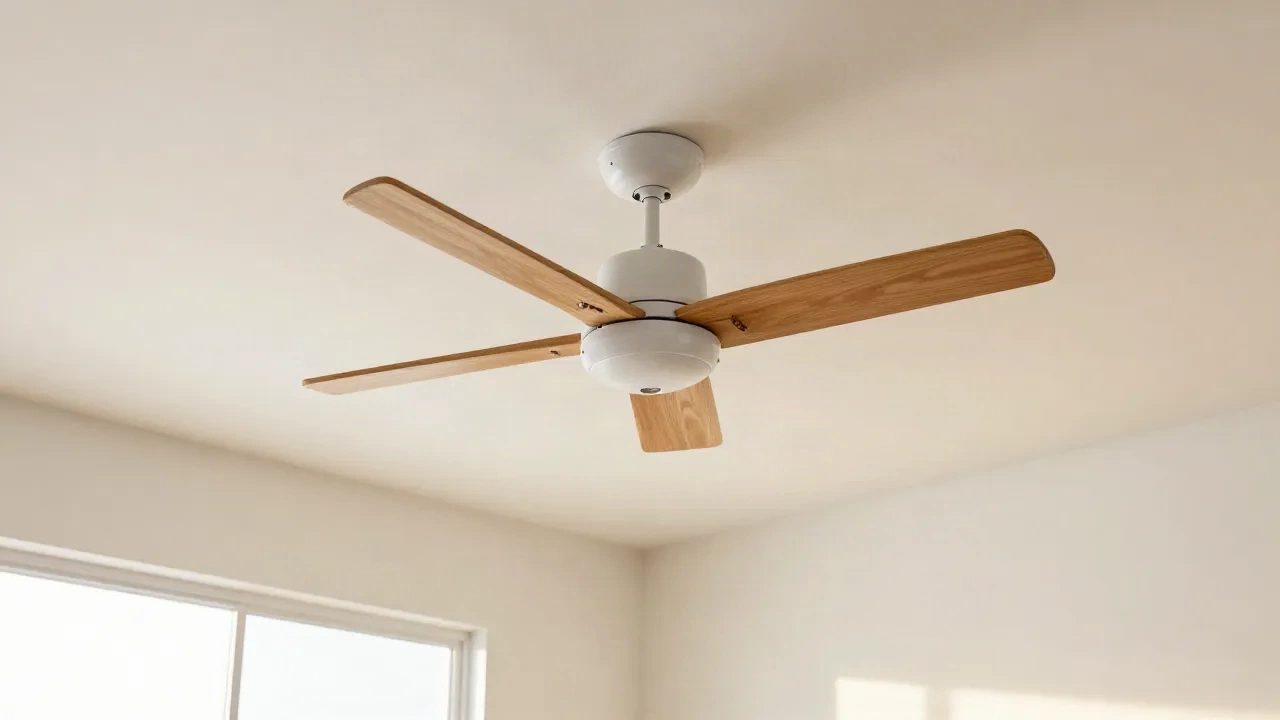
The cost to install a ceiling fan in the US is about $250 to $475 on average, and most homeowners land between $135 and $615. Swapping a fan on existing wiring and a fan-rated box runs $100 to $415 in labor. Running new wiring to a ceiling with no fixture pushes the job to $400 to $1,000, and sometimes past $2,000. Here's what it should cost, and where quotes get padded.
How much does it cost to install a ceiling fan in the US?
Two reputable cost databases give you the range. Fixr puts the national average at $475 for the whole project, with a typical range of $337 to $613. Bob Vila, citing HomeAdvisor and Angi data, lands lower at a $247 average and a $134 to $352 typical range.
Why the gap? Different mixes of jobs. The low numbers lean on simple swaps with a cheap fan. The high numbers include new wiring, better fans and vaulted ceilings. Neither is wrong. Your number depends on which job you actually have.
The national average is a starting point, not a quote. In a high-cost metro like San Francisco or New York, expect 30 to 50 percent more than in Ohio or Missouri.
Here's how location plays out in practice. A basic swap that costs $150 in Indianapolis or Kansas City can easily quote at $300 to $400 in Los Angeles, Boston or Seattle, mostly because electrician hourly rates and minimum service calls are higher there. Texas, Florida and the Southeast sit near the national average, but expect a rush premium in July when everyone's AC is struggling. If you live in a city with its own electrical licensing board, the licensed rate is almost always higher than the surrounding county, so price both before you decide.
Replacing a fan vs. installing one where there's none
This is the single biggest price driver, and the one contractors blur on purpose.
Replacing an existing fan or light fixture on a box that's already rated for fan weight takes one to two hours. Expect $100 to $300 total on the low end and up to $415 if a licensed electrician does it. Fixr lists $228 to $415 for electrician labor and $111 to $204 for a handyperson.
Installing a fan where there's no fixture is a half-day job. The electrician has to cut into the ceiling, fish wire from a switch or junction box, and mount a new fan-rated box. That's $400 to $1,000 in most homes. Bob Vila flags that wiring alone can add $150 to $500, and in the worst cases, with no nearby circuit at all, the bill climbs toward $2,000.
Red flag: if your contractor quotes new-wiring prices when a fixture is already in that ceiling, ask exactly what new wiring they plan to run. Often the answer is "none."
What does the electrician actually charge per hour?
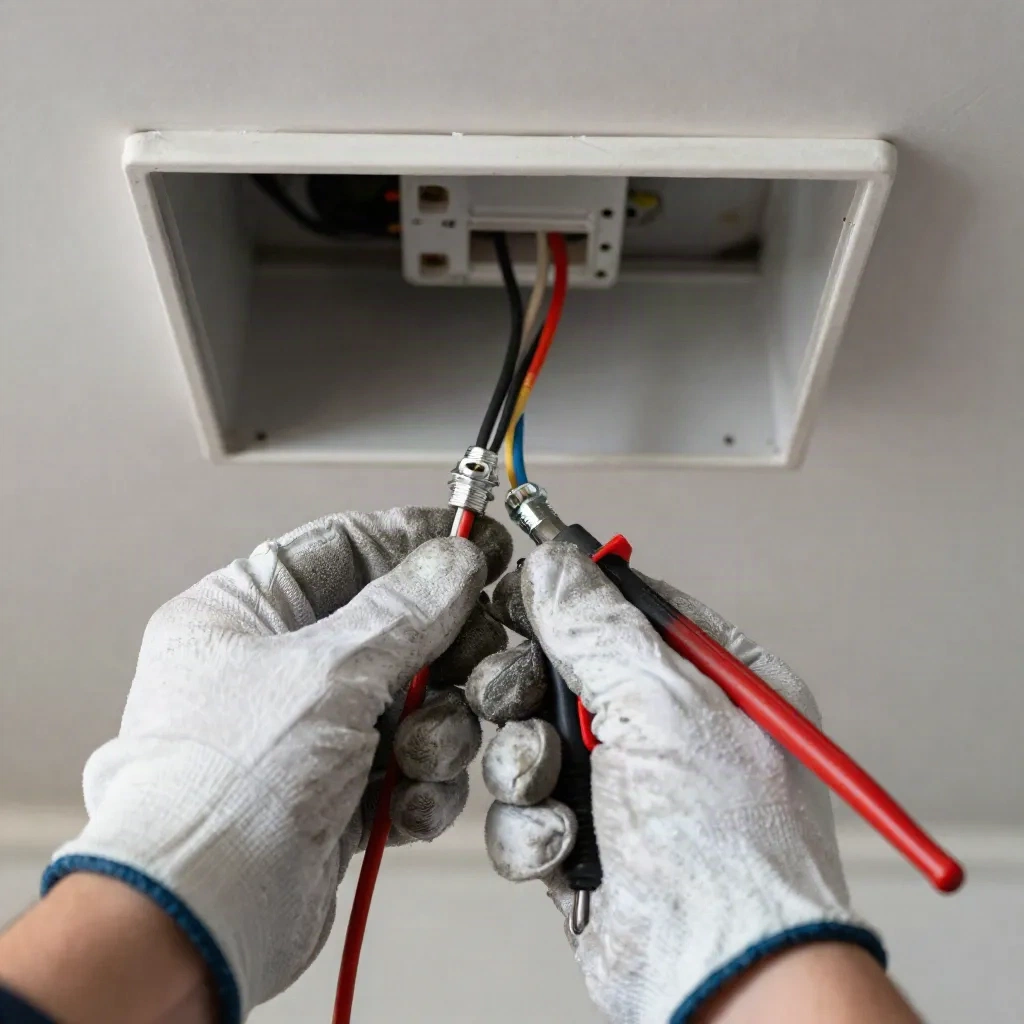
Electrician rates vary a lot. Bob Vila cites $50 to $100 an hour as the typical range. Fixr reports $101 to $183 an hour for new-wiring work, which reflects 2026 rates in metro areas. A handyperson runs $25 to $50 an hour in the cheaper estimate and about $55 to $100 in the pricier one.
Most electricians also set a minimum service call, usually $100 to $200, which covers the first hour. A one-fan swap often gets billed at that minimum plus a bit.
Ask whether the quote is hourly or flat. A flat price for a defined job is easier to check. An open-ended hourly quote for new wiring is where overruns happen.
What does the fan itself cost?
Budget more than you think here, because the fan is often half the bill.
Standard and low-profile fans: $50 to $300. Low-profile (hugger) models suit ceilings under 8 feet.
Hanging propeller fans: $150 to $300. These suit ceilings 9 feet and higher.
Designer and smart fans: $200 to $1,500 and up, with Wi-Fi, app control and quiet DC motors.
Light kits: $100 to $300 if not included.
Remotes: $50 to $100 each.
Downrods: $5 to $100 depending on length.
Skip the $40 fans if the room matters. Cheap motors wobble and hum, and you'll pay a second labor visit to replace it. A $150 to $250 fan with a decent motor is where most homeowners should land.
One more thing worth paying for is airflow rating, listed in CFM on the box. A fan that moves 4,000 to 6,000 CFM cools a bedroom properly. A decorative fan that moves 1,500 CFM mostly spins. Match blade span to the room too: 42 inches for a small bedroom, 52 inches for a living room, 60 inches and up for a big open space. Ask the installer to confirm the fan weighs less than what the box is rated for, because that number is printed right on the box.
What pushes the price up?
Most overruns come from a short list of things. Check your situation against it before you sign anything.
High or vaulted ceilings. Scaffolding or tall ladders, plus longer downrods, add $50 to $300 in labor.
No fan-rated box. A standard light box can't hold a moving fan. Replacing it with a fan-rated brace is $50 to $150 in parts and labor.
Old wiring. Knob-and-tube or aluminum wiring may need upgrades before an electrician will touch it.
Separate switches. A wall switch for the fan and the light, or a dimmer, adds $100 to $300 (Fixr lists $288 to $524 for a full new switch installation).
Drywall repair. Cutting into a finished ceiling means patching and repainting afterward.
Permits. Required in many cities when you add wiring. Typically $50 to $200. Replacing a fixture on existing wiring usually needs none, but check with your local building department.
Also ask who hauls away the old fixture and who handles the patch if the new base plate doesn't cover the old hole. That's a typical $25 to $75 line item hiding in an otherwise honest quote, and it's fair to ask for it upfront rather than discover it on the invoice.
Seasonality matters a little too. Electricians fill up in late spring and early summer when everyone remembers their bedroom is hot. Booking in fall or winter, which is when you're reading this, often gets you a faster slot and a looser calendar.
Can you install a ceiling fan yourself?
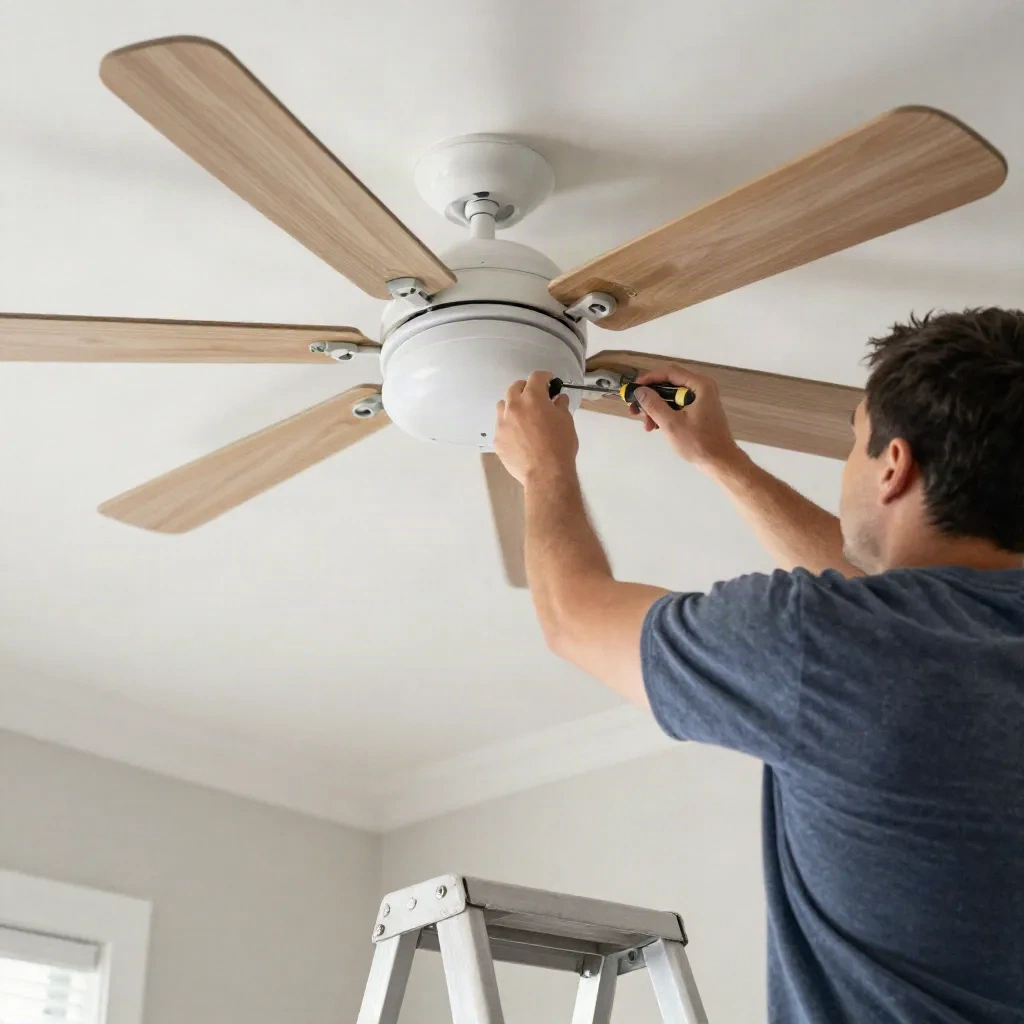
Sometimes. If a fan or light fixture is already there on a fan-rated box, and you're comfortable turning off the breaker, testing the wires and following instructions, a swap is a two-hour DIY job. Your cost is the fan plus maybe $20 in parts.
DIY gets risky when:
There's no existing box or fixture
The box isn't fan-rated (a fan falling is a real injury risk)
The wiring is old, brittle or aluminum
The ceiling is above about 10 feet
Your area requires a licensed electrician for any wiring change
The honest math: DIY saves $150 to $400 on a swap. It saves almost nothing on new wiring, because the risk and the permit headaches grow faster than the savings. Hire out anything that involves cutting into the ceiling or running a new circuit.
Red flags in a ceiling fan quote
Ceiling fan work is small, so contractors sometimes pad it. Watch for these:
No itemization. A quote that says "ceiling fan install, $850" with no breakdown of labor, parts and wiring is hard to verify.
A "new circuit" with no explanation. Installing a fan rarely needs a dedicated circuit. Most fans share the existing lighting circuit.
Materials marked up 100 percent or more. A fan-rated box costs $15 to $30 at a hardware store.
No license number. Verify the contractor's state license and liability insurance before they open your ceiling.
Pressure to sign today. Fan jobs are not emergencies.
Before you sign anything, ask for the license number, the exact scope of electrical work, whether a permit is included and what the workmanship warranty covers (most good electricians offer one year).
How do you check a fan quote before you sign?
Get at least two quotes with the same scope written down: the fan model, the box type, the wiring work and the permit. Compare line by line. A $350 quote and a $700 quote often differ because one includes a new box and the other doesn't.
Then compare against the ranges above. A swap quoted above $450, or new wiring quoted above $1,200 for a normal-height ceiling, deserves a second look. Prices vary by location, material quality and contractor, so use these ranges as a starting point, not a binding estimate.
If you have photos of the ceiling and the existing fixture, send them with the request. Contractors quote more accurately from pictures, and that's the idea behind checking a quote against a photo before you commit.
So what should you actually pay?
Here's the short version for most US homes.
Swap on an existing fan-rated box: $100 to $415 including a basic fan's labor.
Fan where a light fixture exists: $200 to $500 plus the fan.
Brand new fan location, new wiring: $400 to $1,000 plus the fan.
Vaulted ceiling or difficult access: add $100 to $400.
Worst case, no circuit nearby: up to $2,000.
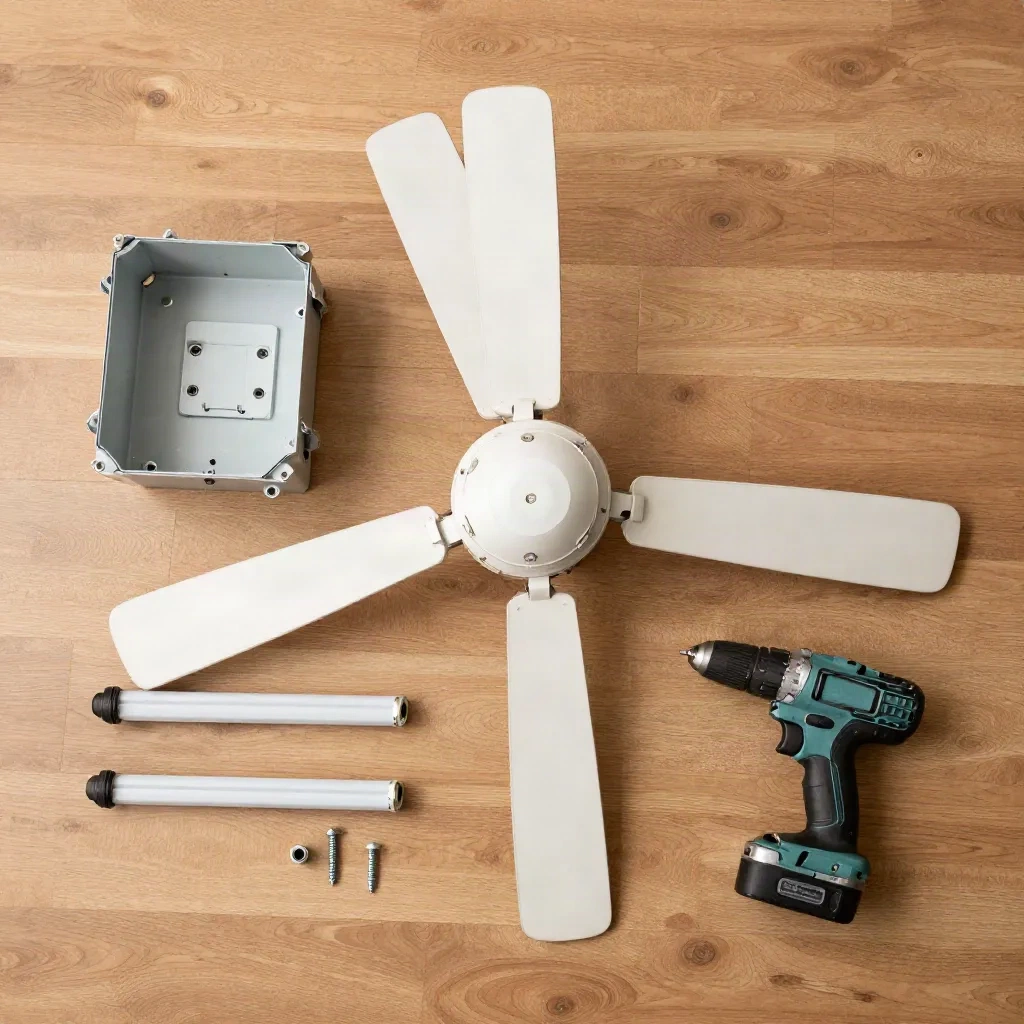
Add $50 to $300 for a decent fan. If your quote sits inside those ranges, it's honest. If it's far outside, ask why, in writing. A good contractor will have an answer.