Foundation Repair Cost: 2026 US Guide by Repair Type
Summary
Foundation repair costs between $2,200 and $8,100 for most US homeowners in 2026, with a national average near $5,179. Simple crack injections run $250-$800. Pier underpinning jumps to $9,000-$40,000 for major structural work. Costs vary significantly by region, foundation type, and severity. DIY is only safe for hairline cracks under 1/8 inch. Anything structural needs a licensed contractor. Always get three quotes before you sign.
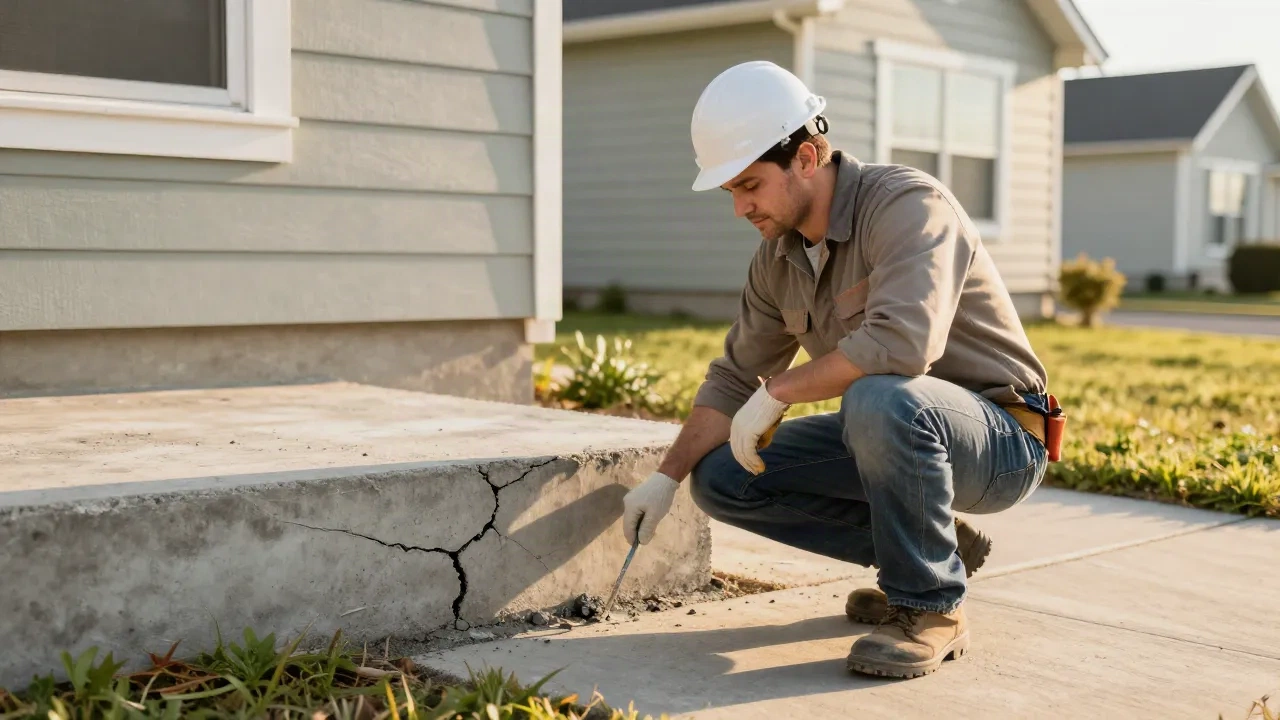
Foundation repair costs between $2,200 and $8,100 for most American homeowners in 2026, with a national average of $5,179. Simple epoxy crack injections start at $250. Full steel pier underpinning on a settling house? Closer to $40,000. The range is enormous because "foundation repair" covers everything from a weekend patch to a six-month structural overhaul. Here's what you need to know before calling a contractor.
Prices vary by location, repair method, and foundation type. Use these ranges as a starting point, not a binding estimate.
What Does Foundation Repair Cost in 2026?
The national average sits around $5,179, based on contractor data compiled in 2026. Most homeowners fall somewhere between $2,200 and $8,100. Those midpoints hide both ends of the spectrum.
Minor repairs start at $250. A hairline crack in a poured concrete wall, sealed with epoxy injection, might cost $300-$500 for a single crack. At the opposite extreme, a home with significant settlement requiring 10-12 steel piers can run $25,000-$40,000 before you add drainage correction, waterproofing, and landscaping restoration.
Here's the national picture by repair scope:
Hairline crack injection (1 crack): $250-$800
Mudjacking / slab lifting: $500-$1,300
Leak repair and waterproofing: $2,300-$7,300
Wall anchors or carbon fiber straps: $4,000-$12,000
Underpinning with steel piers (6-12 piers): $9,000-$40,000
Foundation leveling (full lift): $20,000-$23,000
Red flag: If a contractor quotes you under $500 for "complete foundation stabilization," walk away. That's either a misdiagnosis, cheap materials, or both.
Foundation Repair Cost by Problem Type
The repair method drives the cost more than any other single factor. Here's what each solution actually costs in 2026.
Crack Injection Epoxy or polyurethane injection for non-structural cracks. Budget $250-$800 per crack for polyurethane (faster, more flexible), or $350-$1,000 for epoxy (stronger, more rigid). Most homes with minor crack issues need 2-4 injections, putting total cost at $500-$4,000.
Mudjacking and Slabjacking Pumping a cement slurry beneath a sunken concrete slab to lift it. Typical cost is $500-$1,300 for a section of driveway or patio, $800-$1,600 for interior slab areas. Effective for settled slabs, not for structural damage.
Pier Underpinning The heavy-duty solution for actively settling foundations. Steel push piers run $1,500-$3,000 per pier; helical piers run $1,800-$3,500 per pier. Most homes requiring underpinning need 6-12 piers, putting total costs at $9,000-$40,000. This is where quotes diverge dramatically depending on soil conditions and pier depth required.
Bowed Walls Carbon fiber straps to stabilize bowing basement walls cost $4,000-$8,000 for a typical basement. Wall anchors (bolted into the surrounding soil) run $5,000-$15,000. Full wall replacement: $15,000-$25,000.
Waterproofing Systems Interior waterproofing (drain tile, sump pump, vapor barrier): $2,300-$7,300. Exterior waterproofing with excavation: $8,000-$15,000 and up. Exterior work is more disruptive but provides a more permanent barrier.
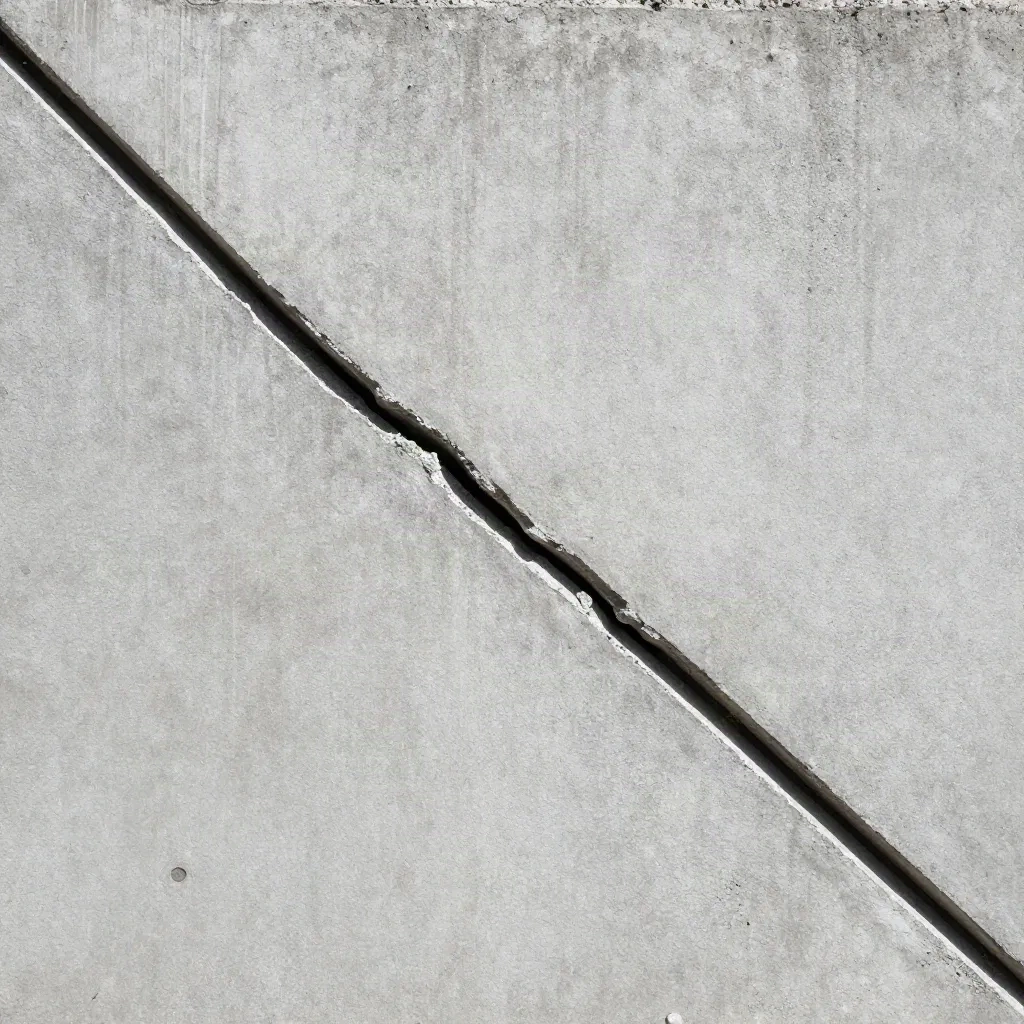
Foundation Repair Cost by Foundation Type
The type of foundation your home sits on affects both the diagnosis and the repair approach:
Concrete slab: $350-$20,000
Basement (poured concrete): $2,300-$7,600
Brick or cinder block: $350-$25,000
Pier and beam / post and beam: $700-$25,000
Stem wall: $350-$20,000
Pier and beam foundations, common in the South and Pacific Northwest, are generally more accessible and less expensive to repair than poured concrete basements. But they're also more susceptible to wood rot and shifting, which can add scope.
Brick and cinder block foundations, common in pre-1970 homes in the Northeast and Midwest, carry higher repair costs because mortar joints require tuckpointing alongside any structural fix.
The Hidden Costs That Inflate Your Final Bill
This is where homeowners get burned. The contractor's quote covers labor and materials for the repair itself. It often does not cover these additional line items:
Structural Engineer Assessment: $300-$1,000 Before any licensed foundation contractor can properly scope the work, you need an independent structural engineer's report. Some contractors include this; most don't. Do not skip it. It's your protection against misdiagnosis and against contractors who upsell unnecessary repairs.
Soil Report: $500-$3,000 Required for complex settling cases. The engineer needs to know whether your soil is clay (expands and contracts with moisture), sandy (poor load-bearing), or rock (ideal). Soil type determines pier depth, which is the single biggest cost variable in underpinning.
Drainage Correction: $2,800-$6,500 Most foundation problems have a water component. Fixing the foundation without fixing the drainage means you'll be back in five years. Expect a French drain or gutter re-routing to be part of the real scope on any moisture-related job.
Permits: $75-$150 Required in most jurisdictions for structural foundation work. Your contractor should pull permits. If they suggest skipping permits to save money, treat that as a hard stop.
Landscaping Restoration: $200-$500 Exterior work requires excavation. That excavation will disrupt yard, garden beds, and sometimes walkways. Get clarity upfront on what "site restoration" is included in the quote versus billed as an extra.
Sump Pump Installation: $641-$2,044 If your basement has moisture intrusion, a waterproofing system often requires a sump pump that wasn't there before. That's an add-on most homeowners don't budget for.
Add these up on a mid-complexity project and you're looking at $2,000-$5,000 in costs beyond the base repair quote. That's the number between what a contractor quotes and what you actually write the check for.
What Drives Foundation Repair Prices Up (or Down)?
Severity and spread of damage A single isolated crack in a stable wall costs $300 to seal. Active settlement across 40 linear feet of perimeter requires 10 piers and costs $25,000 or more. The square footage of affected area is the biggest cost driver after repair method.
Soil conditions Clay soil expands and contracts with moisture changes, causing ongoing foundation movement. Sandy soil doesn't compact well under load. Either condition complicates pier installation and increases labor hours. Expect a 15-25% premium in high-clay regions like Houston, the Dallas-Fort Worth Metroplex, and much of the mid-Atlantic.
Regional labor rates -- what it should cost in your market:
National average: $2,200-$8,100
Texas (Houston, DFW): $3,000-$9,500 (clay soil premium)
California (Bay Area, Los Angeles): $5,500-$14,000 (labor + seismic code)
Midwest (Ohio, Indiana, Missouri): $1,800-$6,500
Southeast (Atlanta, Charlotte, Raleigh): $2,500-$8,000
Pacific Northwest (Seattle, Portland): $3,000-$10,000
The national average is $5,179 -- but in California, expect $5,500-$14,000. In Ohio, closer to $1,800-$6,500. That's a 3x gap for the same repair type. Any contractor quoting you without acknowledging your regional market is giving you a number to sign, not a number to trust.
Contractor demand and scheduling After heavy rain seasons or drought cycles in clay-heavy states, foundation contractor schedules book out 4-8 weeks. Tight supply pushes prices up. Spring in Texas and fall in the Carolinas are peak demand windows. Schedule ahead if you can.
Accessibility Foundation work that requires removing deck sections, concrete flatwork, or significant landscaping before the contractor can even reach the foundation adds $1,000-$2,500 in site prep costs to any quote.
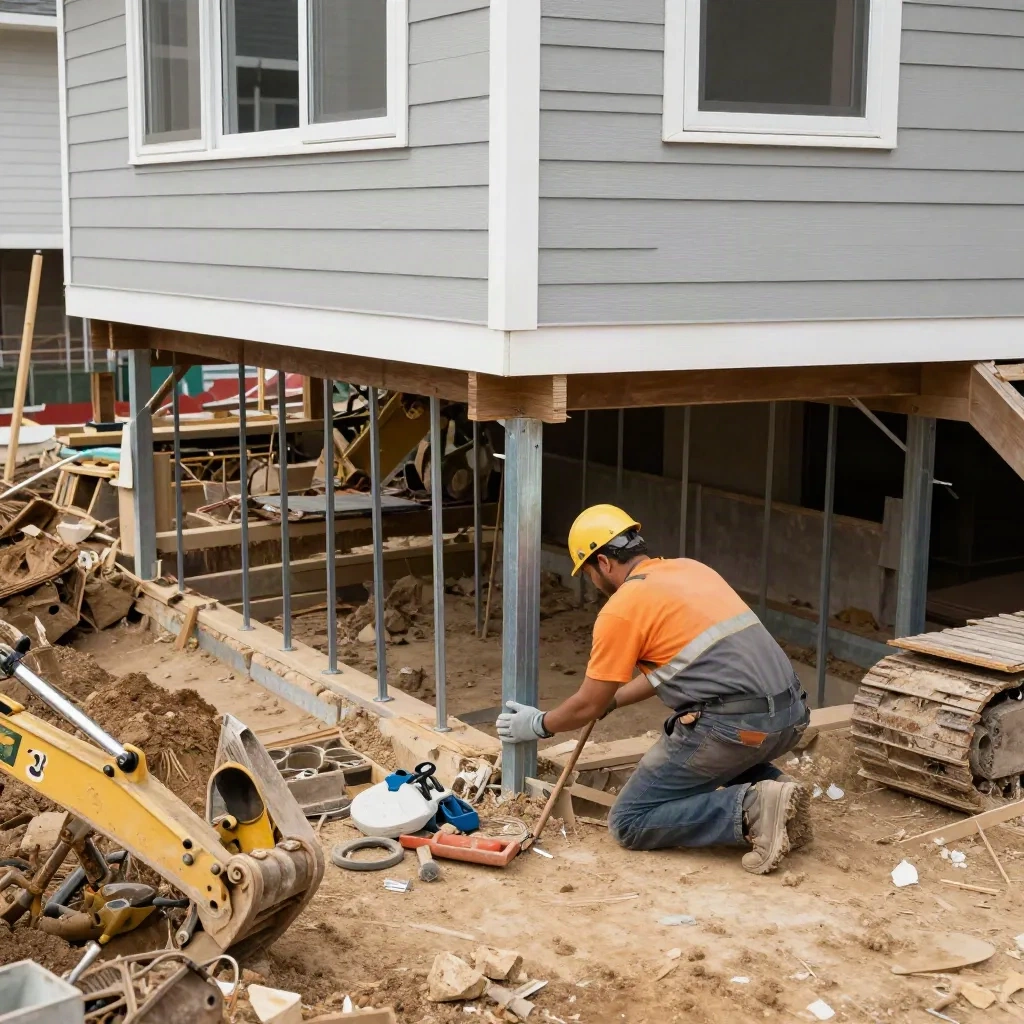
Signs Your Foundation Actually Needs Attention
Not all of these require emergency repair. But all of them warrant an inspection before you defer them indefinitely.
Exterior warning signs:
Horizontal cracks in the foundation wall (the most serious -- these indicate soil pressure pushing inward)
Stair-step cracks in brick or block mortar joints
Gaps between the foundation and the sill plate (the wood sitting at the top of the foundation)
Foundation that has visibly sunk or tilted on one corner
Interior warning signs:
Diagonal cracks running from the corners of door or window frames
Doors and windows that stick or won't close properly year-round (not just during humidity season)
Floors that slope more than 1 inch per 20 feet
Visible bowing in basement walls
Water intrusion that appears after dry spells (a sign of hydrostatic pressure)
The quick test: Put a marble on your floor. If it rolls consistently toward one side of the room, you likely have slope worth measuring. More than 1 inch per 20 feet is the threshold where most structural engineers recommend investigation.
Before you sign anything, check this: a structural engineer's report costs $300-$1,000 and is the only reliable way to distinguish cosmetic cracking from active structural failure. Don't let a foundation contractor diagnose and quote without that report in hand first.
DIY vs. Hiring a Contractor: Where the Line Is
What you can reasonably handle yourself:
Hairline cracks under 1/8 inch wide with no displacement or active movement: DIY epoxy injection kits run $30-$80 at most hardware stores and work well for stable, non-structural cracks in poured concrete
Improving grading around the foundation (sloping soil away from the house is free labor and effective prevention)
Extending downspout extensions away from the foundation
What requires a licensed contractor:
Any crack wider than 1/8 inch
Horizontal cracks (require professional assessment immediately)
Cracks that are actively growing (mark the end of the crack with a pencil and date; check in 30 days)
Bowing or leaning basement walls
Active settlement, sinking floors, or doors that were fine six months ago and now stick
Any pier, anchor, or underpinning work
The cost of DIY on the wrong problem is not the $50 kit. It's masking active movement that a buyer's inspector will find. You'll pay for it in the sale price or in a legal disclosure dispute.
How to Get a Fair Quote (and Spot a Bad One)
Get three quotes minimum. Foundation repair pricing varies 20-40% between contractors in the same market. One quote is a starting point, not a price.
Require a written scope of work. Every item -- materials, labor, permits, site restoration -- should be line-itemed. Vague contracts produce disputes.
Ask for a transferable warranty. Reputable foundation contractors offer 5-10 year warranties on underpinning and structural repairs. Many are transferable when you sell the home, which protects your resale value.
Verify license and insurance. In every state, structural foundation work requires a licensed general contractor or structural specialty contractor. Verify their state license number on your state's contractor licensing board website before signing. An uninsured contractor doing foundation work on your home is a personal liability.
Red flag: the same-day quote. A contractor who can price your foundation repair in 20 minutes without a structural engineer assessment, soil conditions review, or permit verification is quoting blind. Foundation repair is not a commodity service. The contractor who takes time to scope it properly is the one worth talking to.
The best protection against overpaying isn't knowing the national average. It's knowing what your specific problem actually requires before you talk to anyone trying to sell you a solution.