Window Replacement Cost in 2026: What You Should Pay
Summary
Replacing a window costs $300 to $2,500 per unit installed, with a national average of $517 per window and $7,183 for a typical 7-window project. The biggest price variable is whether you need an insert replacement ($175-$250 labor) or a full-frame tearout ($450+ per opening). Frame material, window type, and your local labor market drive the rest. Before signing, get a written scope that covers glass package, permits, and the install method.
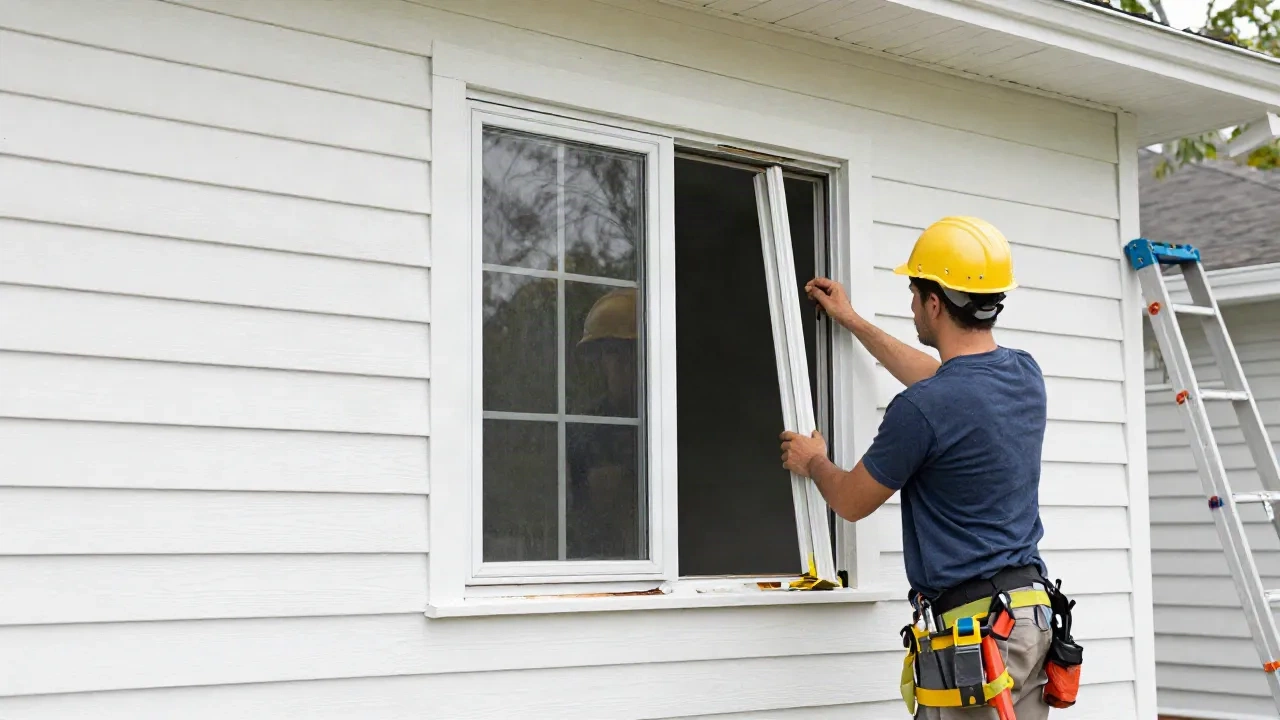
Window replacement cost runs between $300 and $2,500 per unit installed, depending on type, frame material, and whether you're doing a retrofit insert or a full-frame tearout. The national average sits at $517 per window according to This Old House's 2026 survey of real homeowner projects. A typical whole-house replacement of 7 windows runs about $7,183 total. Before you sign anything, here's what should be in that quote.
Prices vary by location, material quality, and contractor. Use these ranges as a starting point, not a binding estimate.
What Does Window Replacement Actually Cost in 2026?
The most reliable number comes from This Old House's 2026 survey: the national average is $517 per installed replacement window, based on real homeowners who completed projects this year. The average project covers 7 windows and totals $7,183.
That number hides a wide range. You can pay as little as $300 for a basic vinyl single-hung in the Midwest, or push past $2,500 for a large custom casement in a California coastal market. The single biggest driver of that spread is not the window itself -- it's whether you're doing an insert replacement or a full-frame tearout.
HomeWyse's 2026 cost calculator puts the national range at $632 to $967 per window for a standard vinyl dual-pane installation. Modernize, which has tracked over a million homeowner projects, reports an average of $1,047 per window when factoring in larger, premium installs. All three sources are right -- they're measuring different market segments.
The Decision That Affects Price More Than You'd Think: Insert vs. Full-Frame
This is the one question most homeowners skip, and it can mean $450 or more per opening in extra labor.
Insert replacement (also called a retrofit or pocket installation) keeps the existing window frame in place. The old sash and glass come out; a new pre-built unit slides in. It costs less, goes faster, and doesn't disturb the interior trim or exterior cladding. Typical labor for this approach: $175 to $250 per window.
Full-frame removal tears out the entire frame, the sill, the stops -- everything. This is required when the frame is rotted, water-damaged, or when you're changing the window opening size. Labor for full-frame work starts at $450 per opening and climbs from there, particularly if your exterior is brick veneer or stucco (add $120 to $300 per window for those finishes).
Red flag: if your contractor quotes full-frame without first inspecting the existing frames, push back. Ask them to show you where the rot or damage is. Most older wood-frame homes can do inserts on at least 60 to 70% of their windows.
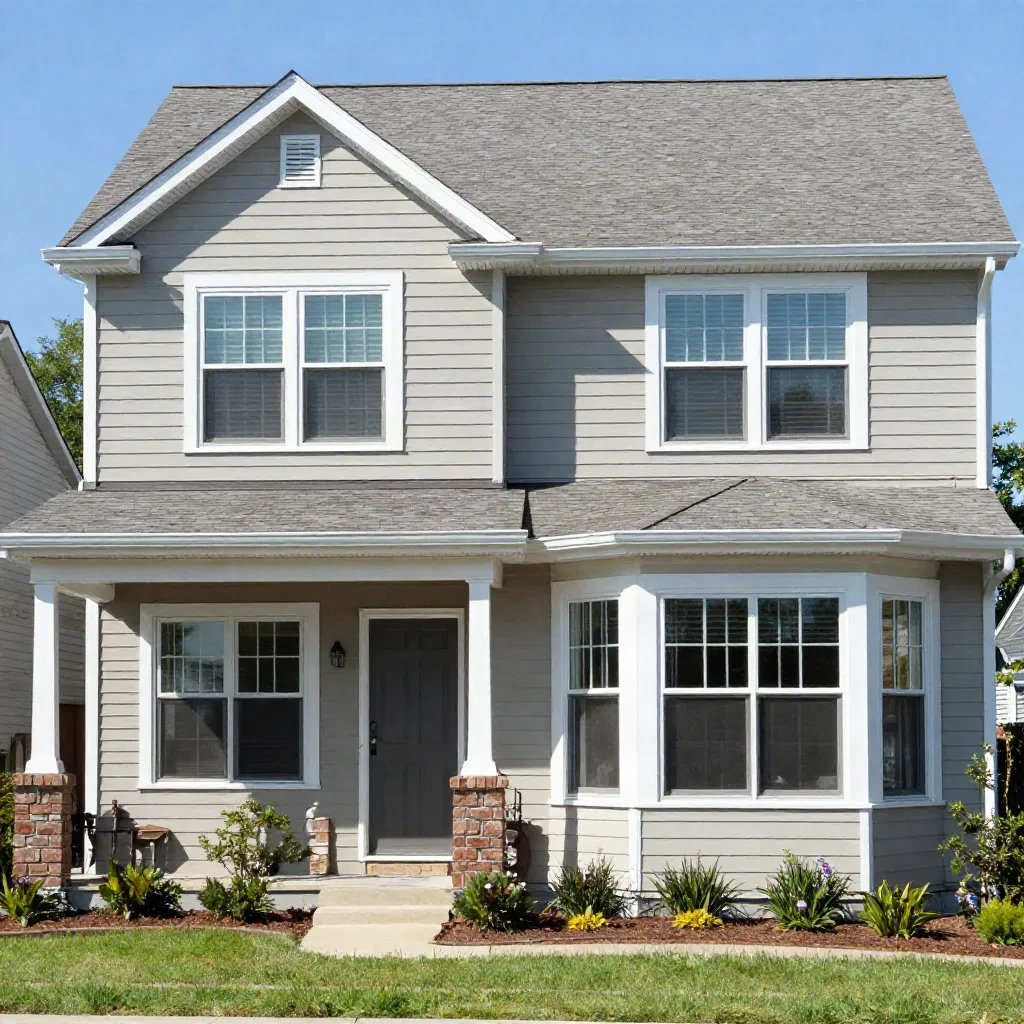
Window Type Pricing: From Single-Hung to Bay Windows
This Old House's 2026 survey breaks down average installed cost by window style:
These are averages across all materials and regions. The practical ranges are wider:
Single-hung vinyl: $200 to $400 installed -- the budget choice for most bedrooms and secondary rooms.
Double-hung vinyl: $350 to $700 installed -- the most common choice, works for most openings.
Casement: $589 to $2,993 -- the range is wide because casements vary from standard 24-inch units to large architectural windows.
Bay and bow windows: $2,000 to $7,000 installed -- labor-intensive structural installs. Never a simple retrofit.
If your contractor is quoting single-hung prices for casements, that's not a deal -- it's an error. Get the window specs in writing before comparing quotes.
Frame Material Breakdown: Vinyl, Wood, Fiberglass, Aluminum
Frame material affects both upfront cost and long-term maintenance. Here are the 2026 national averages from This Old House's survey:
Vinyl is the right call for most homeowners. It doesn't rot, doesn't need painting, and holds its energy performance for 20 to 25 years. Wood is worth the premium on historic homes where matching original profiles matters, or where an HOA restricts material changes.
Aluminum makes sense in mild climates -- primarily Southern California, Arizona, Florida. In Ohio, Minnesota, or New England, aluminum conducts cold straight through the frame. The energy savings argument for vinyl over aluminum is real and measurable in those states.
Labor Costs: Where 35 to 50% of Your Bill Goes
Labor accounts for 35 to 50% of the total cost of a window replacement project. On a $517 national average install, that's roughly $180 to $260 per window in labor alone.
What drives labor costs up:
Second-story or hard-to-reach windows: Add $50 to $200 per window for staging or equipment.
Full-frame removal: Adds $450+ per opening as described above.
Lead paint testing and remediation: Required by federal law for pre-1978 homes. Add $50 to $150 per opening for containment procedures.
Permits: Some jurisdictions require a building permit for window replacement, especially full-frame jobs. Budget $50 to $250 depending on the municipality. If your contractor says permits aren't needed, verify that directly with your local building department.
General contractor markup: If you're working through a GC rather than a window specialty company, expect a 13 to 22% markup on the project total.
What Window Replacement Costs by Region
The national average of $517 per window hides gaps that are not small. Labor rates in San Francisco run 2 to 3 times Midwestern rates. Here's a realistic state-by-state picture based on 2026 HomeWyse data and regional market reporting:
In Florida, impact-resistant glass (required in most coastal counties) adds $100 to $300 per window on top of standard pricing. This Old House's survey found that 34% of Southern homeowners chose impact-resistant glass -- the highest rate in the country.
Here's what it should cost in Charlotte, NC: $450 to $650 per vinyl double-hung installed. The moment someone quotes you $900 a window for a standard vinyl double-hung in the Carolinas, they're either working with premium product or padding the quote. Know which one it is before you agree.
Why 27% of Homeowners Pay More Than Their Quote
This Old House's 2026 survey found that 27% of homeowners paid more than their original quote. 14% reported unexpected costs. 11% needed follow-up work after installation. 9% saw wall or trim damage during the project.
These are predictable problems that most contractors don't mention upfront.
The most common causes of budget overruns:
Hidden rot discovered during full-frame removal. Once the old frame is out, the contractor finds water-damaged framing. This is legitimate -- but any competent contractor should probe for moisture before quoting. Ask them to use a moisture meter on the sills before you sign.
Change from insert to full-frame mid-project. The contractor starts an insert job and discovers the existing frame is too warped or out-of-square to use. Make sure your quote specifies which approach you're paying for, and what the contingency rate is if they need to switch.
Glass upgrade upsell at installation. Some contractors quote standard clear glass, then sell you on low-e or triple-pane the day of install. That glass upgrade is often worth it -- but it should be your decision before the project starts, not a conversation at 8 a.m. with a crew on your lawn.
Permit fees not in the original quote. Get a clear line item for permits and any required inspections before you agree to anything.

Is the Energy Savings Argument Real?
Yes -- but not as dramatic as some contractors make it sound.
According to This Old House's survey, 36% of homeowners who upgraded to double-pane windows reported monthly energy bill reductions of $25 to $49 -- or $300 to $588 annually. That's meaningful over the 20-to-25-year life of a good window.
Double-pane glass with low-e coating is now the standard for 2026 -- 76% of replacement windows installed this year used it. The average installed cost is $529 per window versus $400 for single-pane. That $129 difference pays back in 2 to 5 years in most climates.
Triple-pane averages $609 per window. The energy improvement over double-pane is real but marginal in most US climates -- the payback stretches to 10 to 15 years. Worth it in Minnesota or Maine. Less compelling in Georgia.
Before You Sign: What a Fair Window Quote Looks Like
A legitimate window replacement quote covers these points in writing:
Window type, size, and frame material for each opening
Glass package: single, double, or triple pane; low-e coating; U-factor rating
Install method: insert replacement or full-frame, specified per window
Permits: which are required and who pulls them
Lead paint disclosure: for homes built before 1978
Contingency language: what happens if the contractor discovers frame damage mid-job
Workmanship warranty: 1 year minimum on labor; manufacturer warranty on the window unit (look for lifetime limited on vinyl)
Always verify the contractor's state license and general liability insurance before signing. Ask for the license number and check it on your state's contractor licensing board website -- a 60-second check that eliminates the highest-risk scenarios. Check that they carry at least $1 million in general liability coverage.
Red flag: a quote that's valid for 24 hours only is a pressure tactic. A contractor confident in their pricing will give you 5 to 10 business days to decide.
Prices vary by location, material quality, and contractor. Use these ranges as a starting point, not a binding estimate.