Summary
This concrete calculator tells you how many cubic yards and bags of concrete a slab, footing or round column needs. Enter the size, pick a waste buffer, and it returns the order quantity plus a rough material cost for bagged mix and ready-mix. Prices are editable estimates. A 10 by 10 foot slab at 4 inches needs about 1.5 cubic yards.
Concrete Calculator: How Much Do You Need?
Enter your slab, footing or column size. Get cubic yards, bags and a rough material cost in seconds.
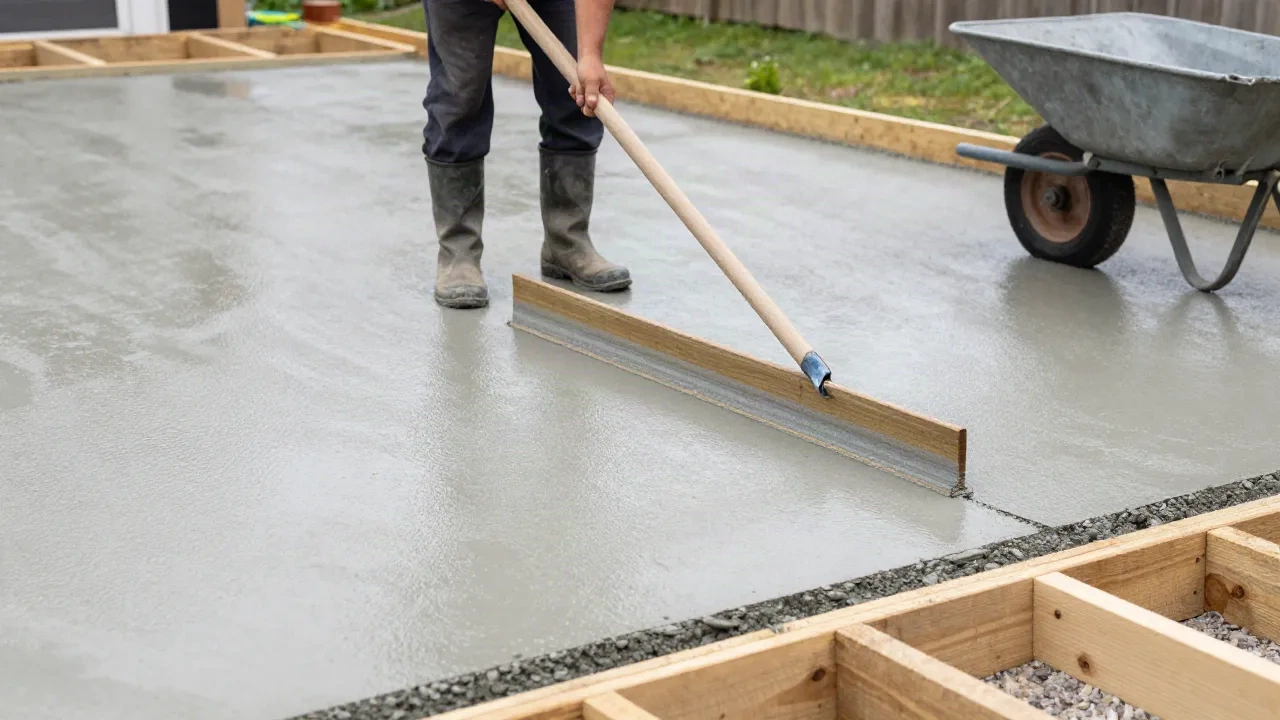
What goes into your number
Volume first
For a slab or footing the calculator multiplies length by width by thickness, with thickness converted from inches to feet. For a round column it uses pi times the radius squared times the depth. Then it multiplies by the number of identical pieces.
Extra on top
Real pours need more than the math says. The tool adds 5%, 10% or 15% for spills, bowed forms and a subgrade that is not perfectly flat. Then it rounds your order up to the next quarter yard, the way most plants take orders.
Bags and cost
Cubic feet divided by the yield of your bag size gives the bag count, rounded up. Ready-mix cost is your order in yards times the price per yard. Both prices are editable, because they change a lot by region.
Measure twice, then add the waste
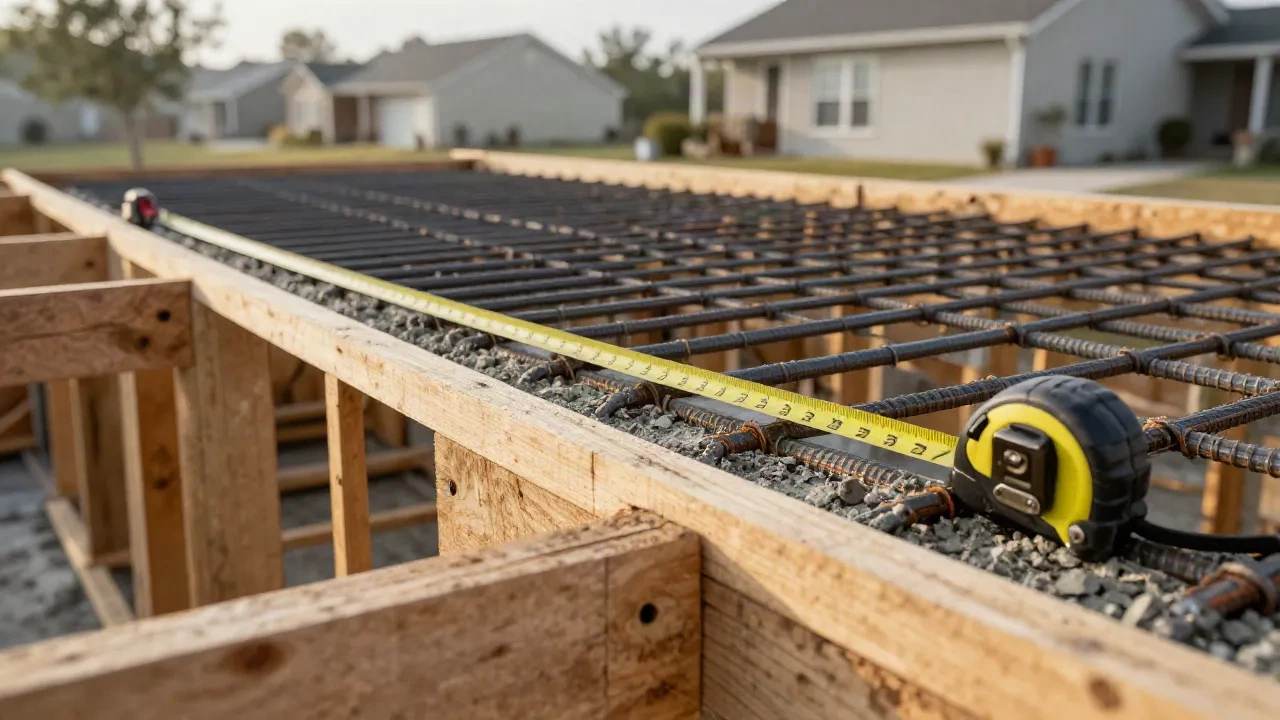
Most concrete mistakes happen before the truck shows up. Measure the inside of the forms, not the outside of the lumber. Check the depth in several spots, because a base that dips an inch across a 10 by 20 foot slab adds about two-thirds of a cubic yard. If the forms hold rebar or mesh, that steel barely displaces any concrete, so do not subtract for it. Here's what it should cost for a small job: a 10 by 10 slab at 4 inches needs about 62 bags of 80 lb mix, which at 7 dollars a bag is around 430 dollars. The same pour as ready-mix is about 1.5 yards, near 250 dollars before any short-load fee. That gap is why the bag-versus-truck tip in the result matters.
- Measure the inside of the forms
- Check depth at several points
- Round up, never down
- Ask the plant about short-load fees
Three steps to a safe order
-
1
Pick your shape and size
Choose rectangle or round, then enter feet for length and width, inches for thickness or depth. Use the pieces field for repeats like four post footings.
-
2
Compare bags and truck
Check both cost lines. Under one cubic yard, bags usually win. Over two, the truck wins on time, labor and a consistent mix.
-
3
Get a real quote
Red flag: if your contractor quotes a flat price and will not show the yards of concrete in it, ask. A fair quote lists materials, labor and base work separately, and you can check the concrete line against this number.
Concrete calculator FAQ
Is this concrete calculator free?
How many cubic yards of concrete do I need for a 10x10 slab?
How many 80 lb bags make a cubic yard?
How thick should a concrete slab be?
Why add 10% extra?
What does ready-mix concrete cost per cubic yard?
Does this include labor, forms, rebar or the base?
How accurate are the bag yields?
Got a contractor quote to check?
Upload a photo of the job and Pic2Quote gives you a fair price range before you sign anything.